
Creative, Compelling Preaching
The name of Fred Craddock is synonymous with excellent preaching. Preaching is excellent when it changes people, and those changed people change their local community, and eventually the culture. Excellent preaching begins with a clear understanding of God’s word, shapes that message through a clear understanding of the local culture, and delivers that message through careful and creative engagement with the lived experience of the audience, all guided and empowered by the Holy Spirit. The Fred Craddock Center for Preaching Excellence carries on Dr, Craddock’s concern
for excellent preaching.
Whether you’ve been preaching for years or are just exploring a call to preach, the Fred Craddock Center is here to help support and equip you for the task of preaching.
The Center provides overnight retreats, one-day workshops, lectureships, and online content focusing on various topics to accomplish this, as well as facilitating peer groups encouraging preaching excellence. In addition, also have the privilege of curating and making available to scholars and students of preaching Dr. Craddock’s unpublished papers, letters, notes, and books from his personal library. While we are pleased to serve all who preach the Gospel, the Fred Craddock Center shares Dr. Craddock’s concern for preachers from smaller congregations that have little time or money for more advanced education. That concern leads us to focus our efforts on two geographic and cultural areas—Appalachia and Hispanic central and southern Florida, both of which are also historic areas of focus for Johnson University.
OUR goals
“If there is a disease in the preaching that I hear most often, it’s not that what
the minister says is wrong. It’s that it is just too small.”
CRADDOCK ON THE CRAFT OF PREACHING
FUTURE events
8 April
2026
The Craddock Lectures on Preaching
Building Accessible Bridges: Engaging Disability in the Preaching Event
with Dr. Rochelle Scheuermann
Assistant Dean of Ministry and Evangelism
Wheaton College
OUR namesake
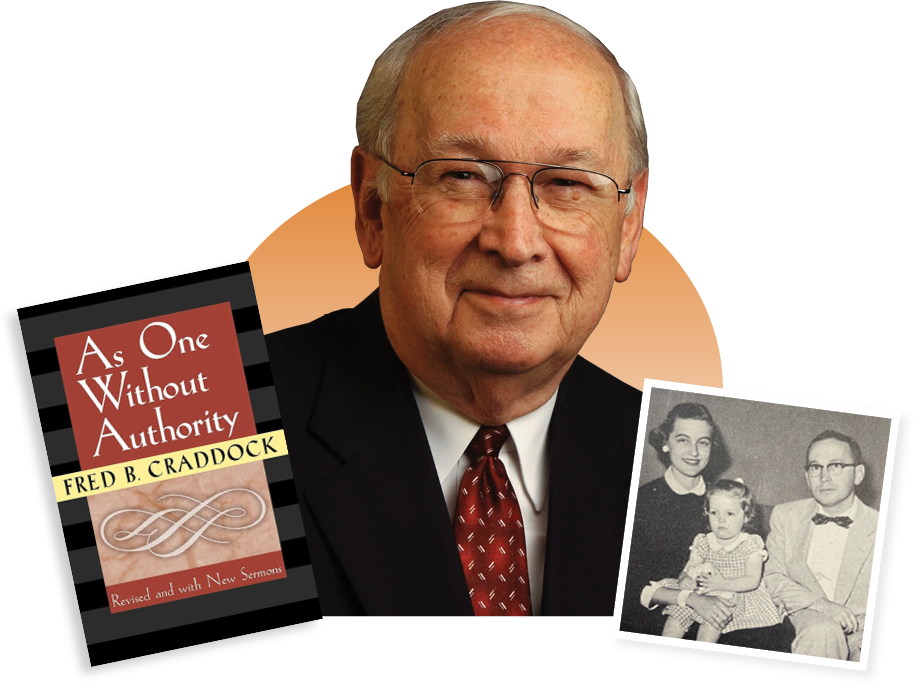
Fred Craddock is one of the most influential homileticians of his era. His books, sermons, and lectures have been used in homiletics classrooms around the world for over fifty years, and Newsweek published a study that included him among the twelve most effective preachers in the English-speaking world. Craddock’s greatest contribution was his innovation in homiletical theory in an era when preaching needed new life.
THE sermon crafting BLOG
Who Are These People? Preaching in a Smaller Congregation
by Barney Wells, DMin Director, The Fred Craddock Center for Preaching Excellence Last week Chuck Sackett shared some insights from his experience preaching in a large church. My own experience is in a much smaller context. For over 25 years I preached in a church whose primary worship space was 30 feet by 30 feet, and with folks sitting a little closer than most Americans are comfortable with, the room would max out at 106...
Who Are These People? Preaching in a Larger Congregation
By Chuck Sackett Preaching Team-Madison Park Christian Church, Quincy, IL (NOTE: This is the first of a two-part series on how the size of the congregation/audience affects the way you prepare and deliver a sermon. BW) Each Sunday the preacher in a larger congregation (350+) delivers a message, he speaks to two groups of people—those he knows and those he doesn’t. Since a person can know only 100-150 people well, that means the other 250+...